
SPECIAL OLYMPICS OPENING CEREMONIES · CONNECTICUT
The Torch Runner Died the Night Before.
Opening ceremonies. Thousands in the grandstands. No one knew what to do.
How live art turned tragedy into legacy.
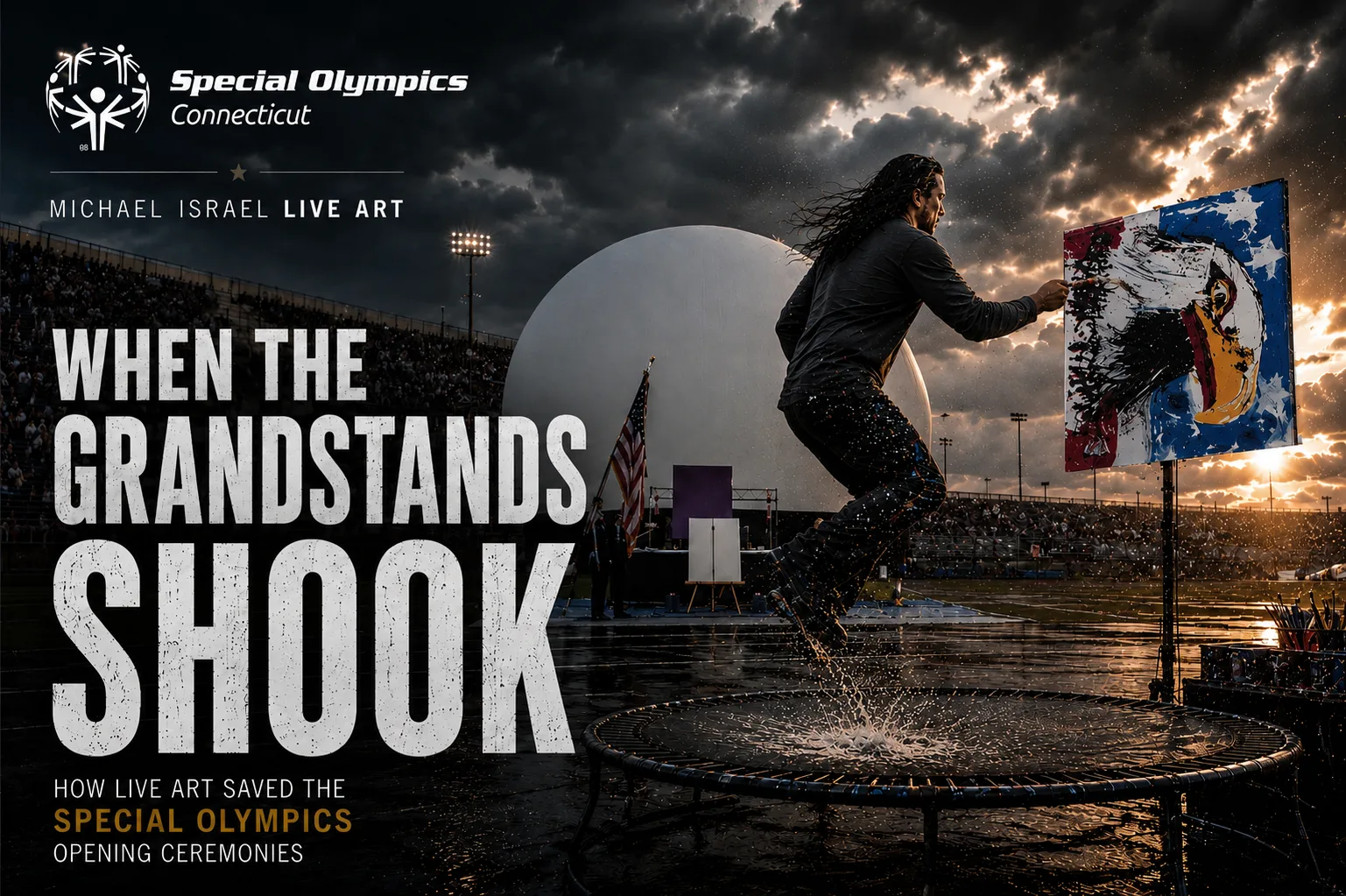
The night before the Special Olympics opening ceremonies, the torch runner died.
He was forty years old. A police officer. A husband. A father.
The next evening — moments before my performance — the police chief would deliver his eulogy, to grandstands filled with people who feel every emotion with everything they have.
The producer believed the eulogy would end the event in gloom. A terrible memory.
I asked her for one thing: an extra canvas.
I had no photo of the man. No time. A song half the length I needed. A surface designed to throw me off balance. And a stadium drowning in grief.
By the time I put down the brush, the grandstands were shaking.
This is how it happened.
Please let us know if this story touched your heart by clicking the heart below
Chapter One — The Torch Runner Died the Night Before
I'd been booked for the Special Olympics opening ceremonies in Connecticut. Solo gig. No crew. Just me, a trampoline, and a canvas. I was scheduled to paint a torch runner...
 Yes — a trampoline. A surface designed to throw you off balance, under a painting that thousands of people have to immediately recognize, finished in minutes. The night before any show, I pull more than a hundred steel springs into the frame by hand — each one a war between my fingers and a steel hook — then ice my hands and pray they recover by showtime. The math is always tight.
I made one thing clear: I needed to set up the night before.
They picked me up at the airport.
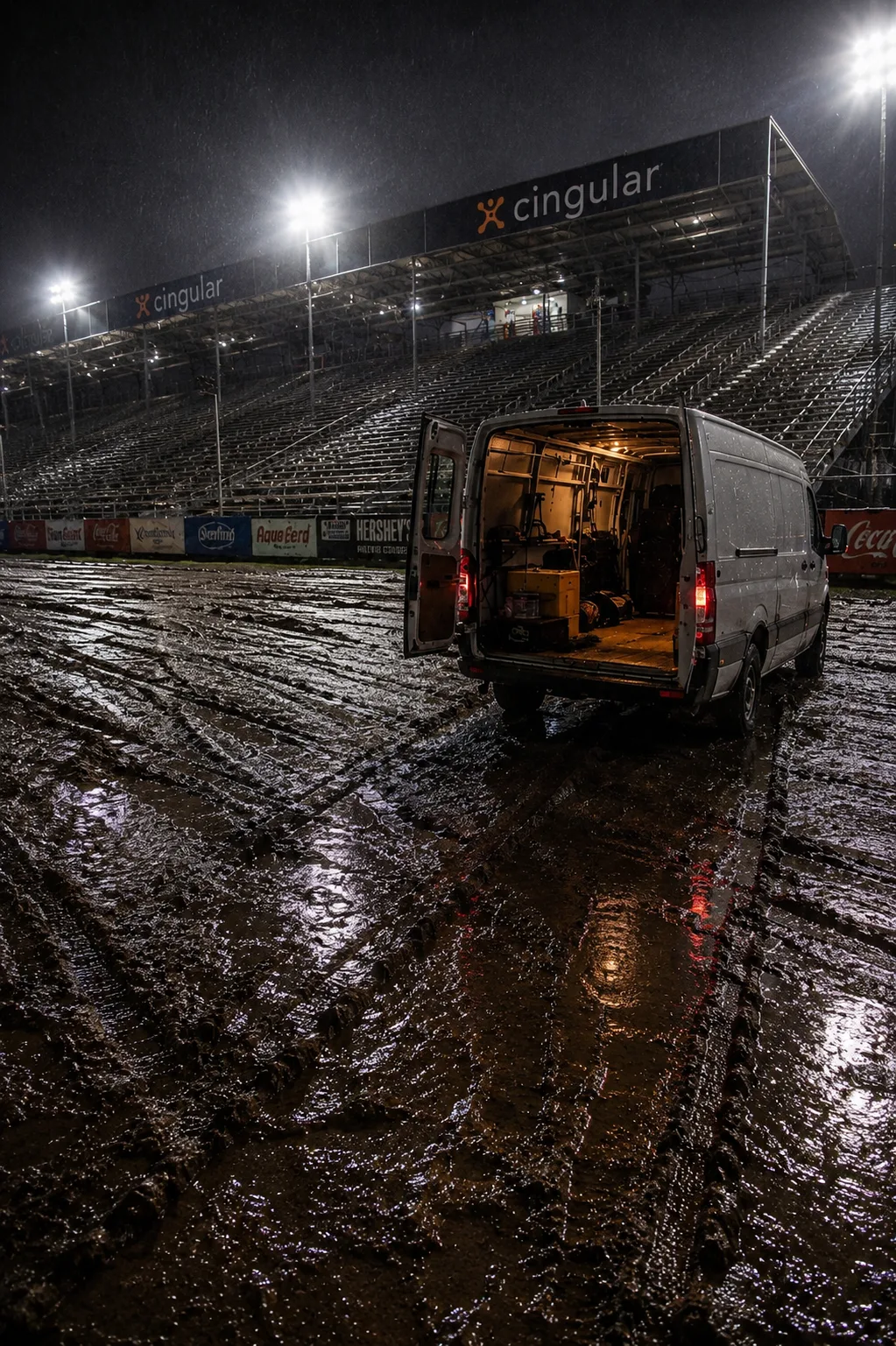
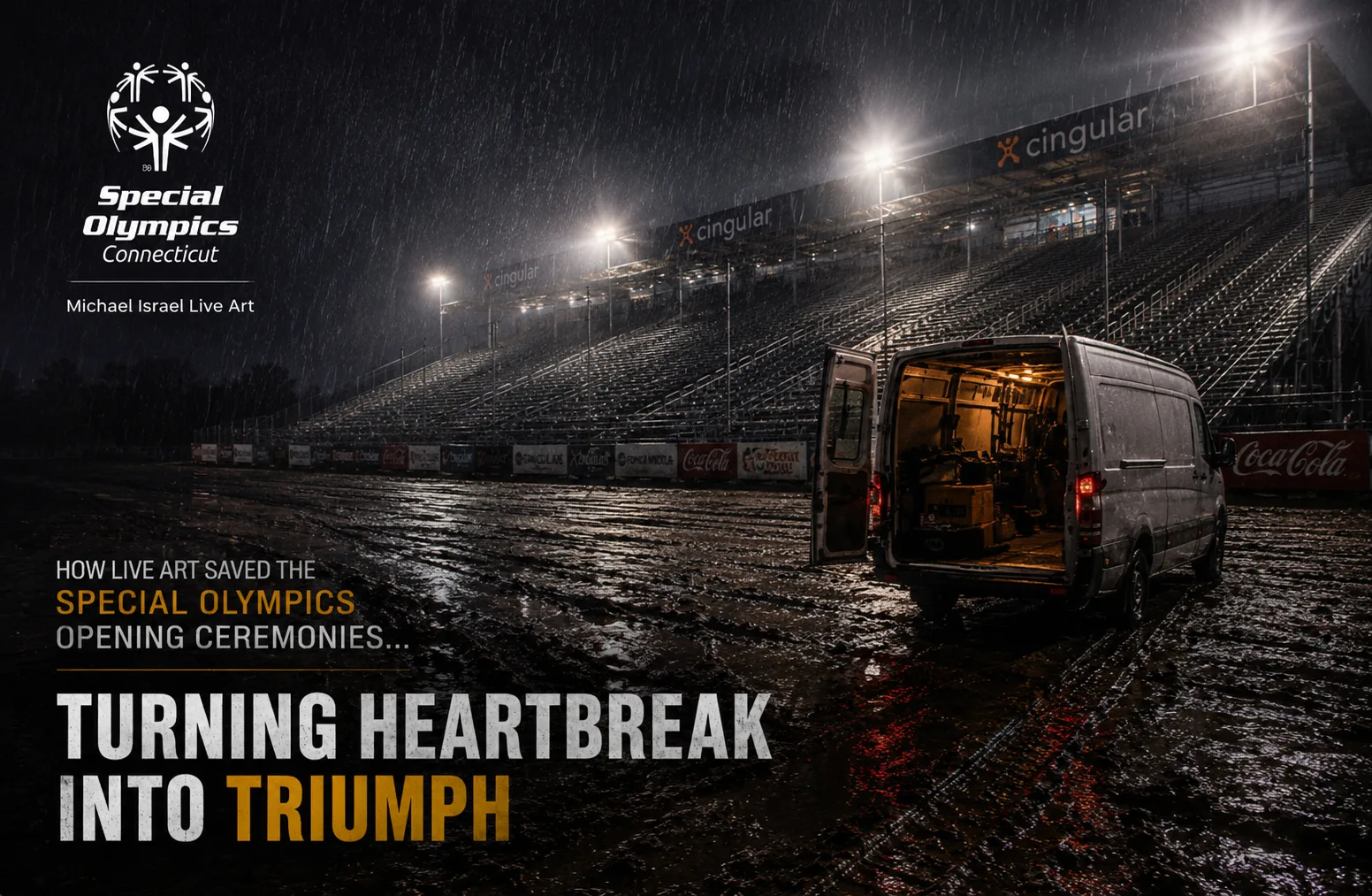
The wipers were useless. Full speed, slapping back and forth, and I still couldn't see ten feet past the windshield. Rain hammered the roof of the van like it was trying to get inside.
The van turned off pavement and onto mud. A massive venue materialized through the downpour — a racetrack looping in an oval, grandstands rising on the far side, sponsor banners snapping and twisting in the wind. This was where tomorrow's celebration would happen.
Right now it looked like the end of something, not the beginning.
Then someone pounded on the side of the van.
Not a knock. A pound. Open-palm, full-force, the kind that vibrates through sheet metal and travels up your spine.
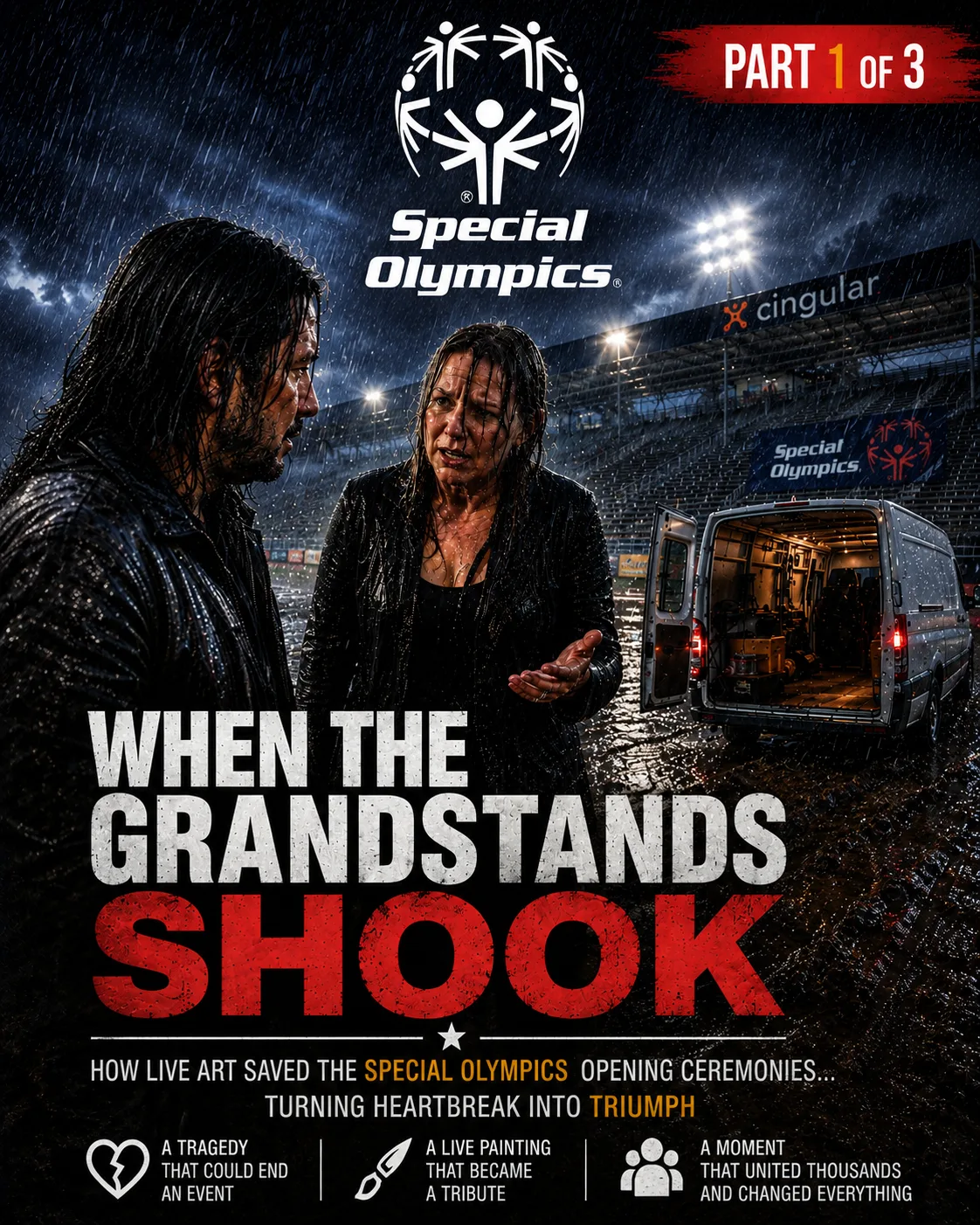
The door slid open. Rain blew sideways into the cabin. And standing there — no umbrella, no raincoat, water streaming down her face — was the event producer.
I have seen a lot of faces in my career. Before shows, after shows, during the worst moments and the best ones. I had never seen a face like hers.
“I have bad news.”
I figured it was about setup. The rain, the mud, the field. Don't worry, I told her. I'll manage it tomorrow.
She shook her head. Slowly. The kind of slow that tells you the next sentence is going to land somewhere you're not ready for.
“The rain is the least of our worries.”
The torch runner had died. During practice. That afternoon.
In my mind, I pictured an elderly man — a beloved figure who'd been doing this for decades and just couldn't make it one more time. A sad loss, but a gentle one.
That picture shattered.
He was forty years old. A police officer. Beloved — the kind of man people described with words like “everyone” and “always” and “the first one there.” He left behind a wife. Children.
I didn't know what to say. Rain was pouring into the van through the open door and I didn't care.
Then she said: “And that's not the worst of it.”
What could be worse?
“The police chief is going to give the eulogy tomorrow. Right before you go on.”
She paused. Rain running down her face. Then she said something I will never forget.
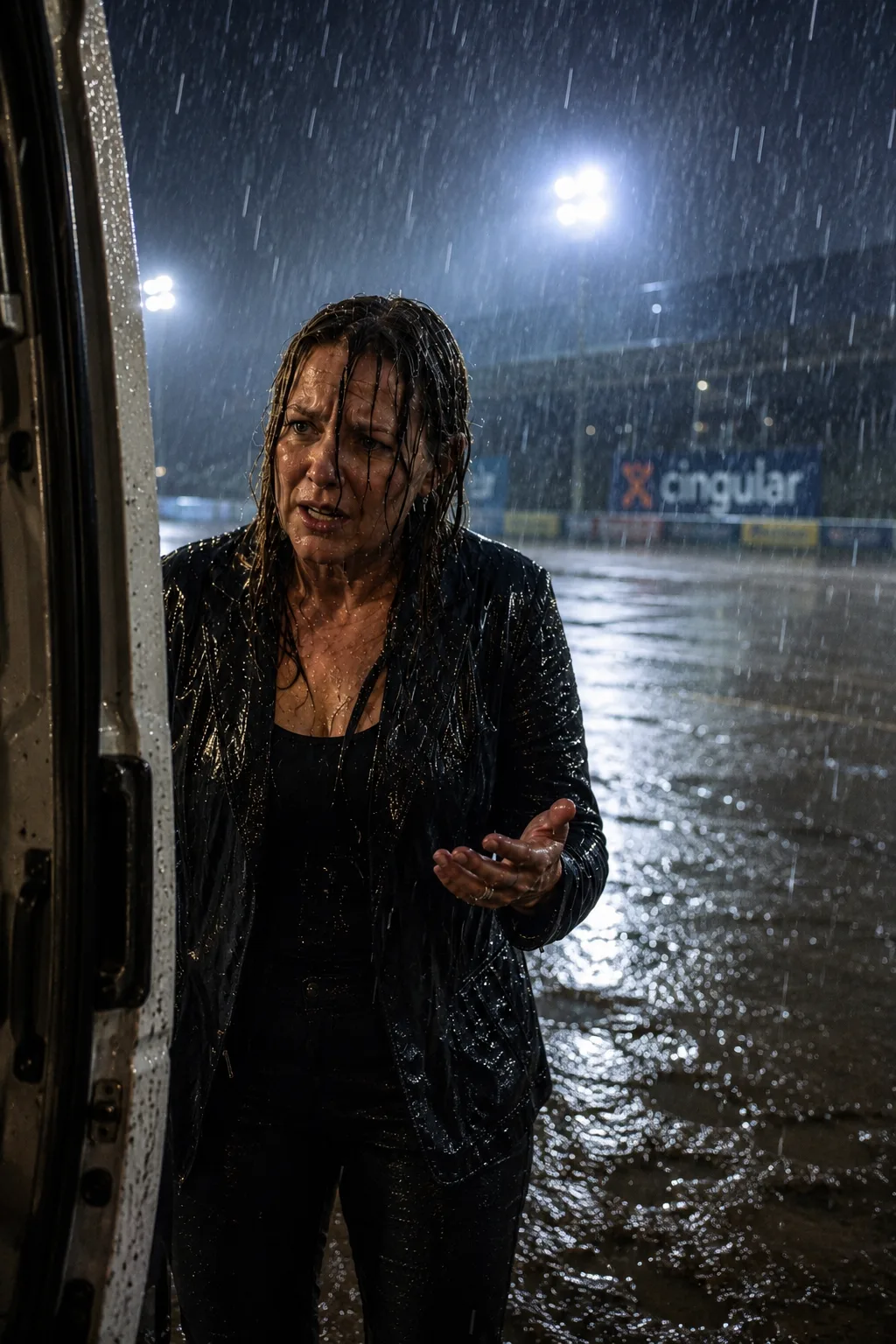
“Remember — the Special Olympics is a celebration of ability. It's not only the athletes on the field. The grandstands will be filled with neurodivergent kids and adults too. And when they feel an emotion, they feel it with everything they have. It's impossible to let go. The eulogy is going to bring more gloom than these storms. It will pretty much be the end of the event. A terrible memory.”
Her voice cracked. “But there's nothing we can do. We cannot leave honoring this great man out.”
The rain filled the silence between us.
Throughout my career, when a family or a community has lost someone, I've learned something most people don't expect: a painting is more powerful than any speech. Something visual that carries the weight of a life and holds it in a form people can look at without breaking.
I asked if she could get me a photo of the officer.
There wasn't time.
I looked at her. She looked at me. Rain and tears, and neither of us could tell which was which.
“Get me an extra canvas for tomorrow.”
Please let us know if this story touched your heart by clicking the heart below
Chapter Two — Get Me an Extra Canvas
I didn't have a photo. I didn't have time. And I was about to paint a tribute to a man I had never met, in front of thousands of people who had just been told he was dead.
But I had an idea.
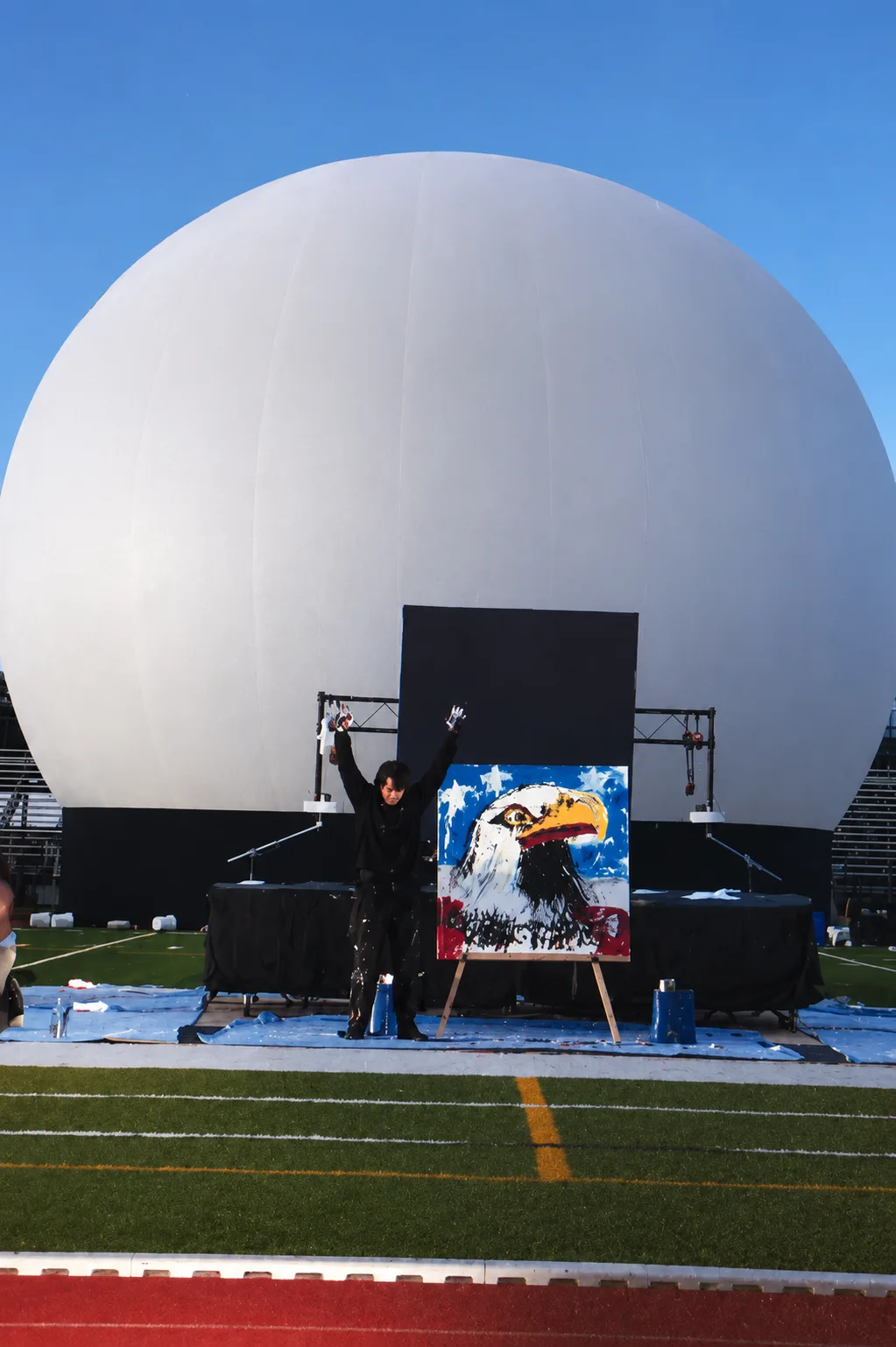
An eagle.
Not a portrait — I couldn't paint a face I'd never seen. A symbol. Something powerful enough to carry the weight of what this man meant to everyone who loved him. The kind of image you don't need words to explain.
The question was the music.
I'd heard a song that week. “Where Stars and Stripes and Eagles Fly” by Aaron Tippin. Patriotic. Raw. The kind of song that pulls you to your feet whether you mean to stand or not. The moment I heard it, something clicked. That was the eagle's soundtrack.
There was one problem.
The song was under four minutes. I typically need eight.
Four minutes to create a realistic, recognizable painting on a massive canvas. Bouncing on a trampoline. With hands still recovering from pulling a hundred springs. No second take. Every stroke has to land exactly where it needs to, because there is no time to fix anything.
Most artists won't paint in front of people at all — the possibility of failure in real time, with no way to hide, keeps them in studios behind closed doors. I'd built my career on the opposite. But this was different. This was a tribute to a great man who died. In front of his colleagues. His friends. His community. If I failed, I didn't just embarrass myself. I dishonored him.
I told myself: tomorrow, I will make it happen.
I didn't sleep well.
Presidential - Side Story
The full story is for another time, but it matters here.
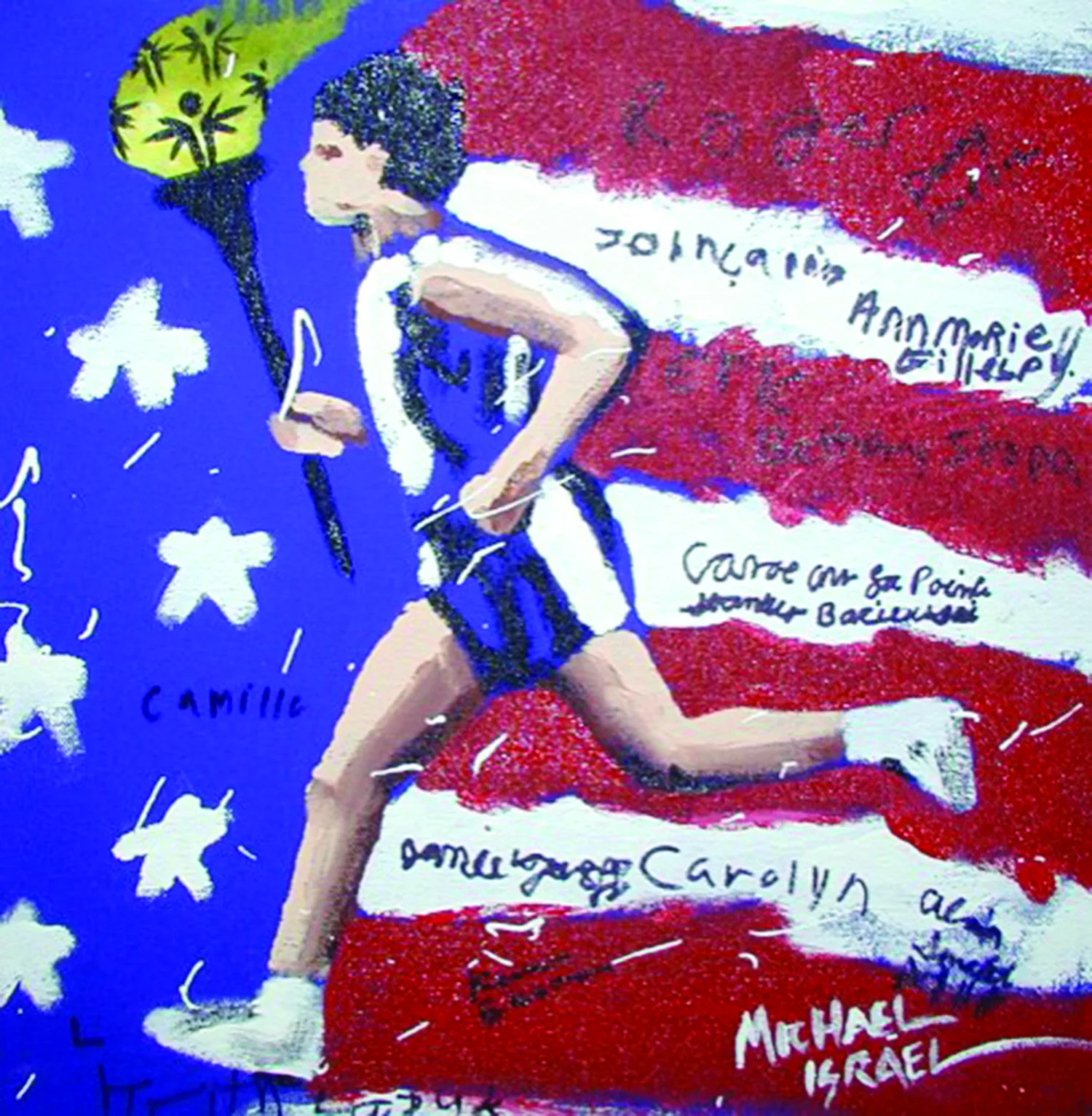
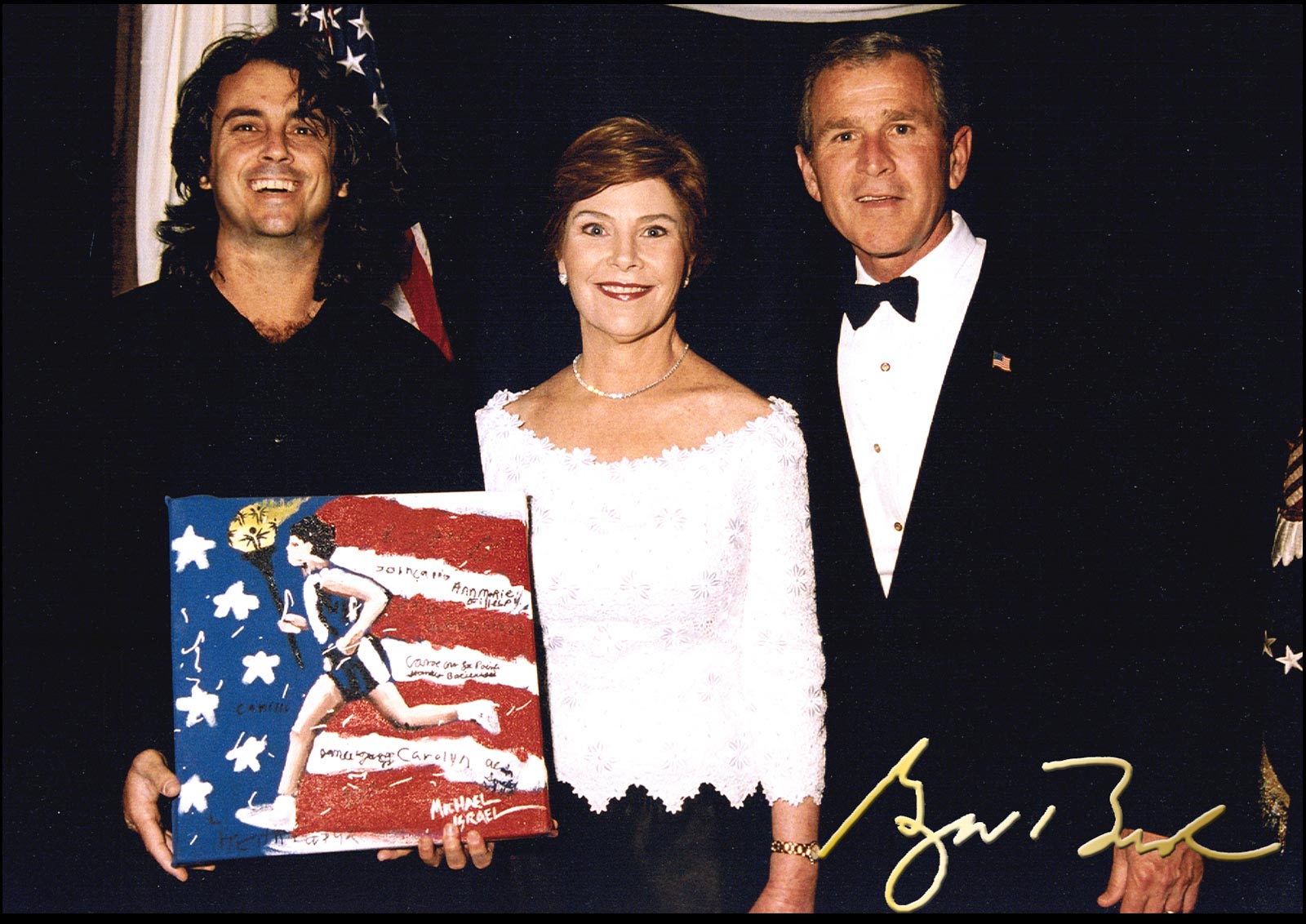
The following week I was scheduled to be in Washington, D.C., performing at a presidential dinner—the largest of its kind in our nation’s history. For that event, I had already painted a small canvas depicting the image I would soon create in Connecticut: a torch runner carrying the Olympic flame, framed in red, white, and blue, with the Special Olympics emblem behind him.
The plan was simple. The Special Olympics ambassadors would sign the small painting at the CT event.
Then at the presidential dinner, after I painted the President’s portrait, I would present it to the President and First Lady as a symbol of celebration, achievement, and hope.
That’s what I thought I was carrying into Connecticut.
A gift destined for the White House.
A painting meant to celebrate life.
Instead, I arrived to a tragedy.
Please let us know if this story touched your heart by clicking the heart below
Chapter Three — They Announced My Name to Silence
By early evening the next day, the rain had cleared. The standing water was gone. The opening ceremonies were back on.
At first, everything was what the Special Olympics is supposed to feel like. Athletes marching. Families cheering. Kids waving signs. Music playing. You could feel the pride radiating off the field in waves. This was their day. These athletes had trained and fought and overcome things most people can't imagine, and today they were the center of the world.
Then the police chief stepped to the microphone.
The shift was physical. You could feel it cross the field like a change in air pressure. The cheering faded. The signs came down. Thousands of people — went still.
He spoke about his officer. His friend. The man who was supposed to carry the torch today. He talked about the wife, the children, the community that would never be the same. His voice held steady for most of it.
Not all of it.
The grandstands absorbed every word. And the kids and adults in those stands — many of whom feel emotions with unusual intensity —the ones who feel everything and can't let go — absorbed it deepest. I could see it happening from across the racetrack. The slumping. The stillness. The way a child folds in on themselves when sadness is too big for their body.
It felt like dark clouds of gloom gathering over the grandstands, pressing down on every person at once.
The eulogy ended.
Silence.
Not the kind that comes before applause. The kind that comes when nobody knows what to do with what they just felt.
They announced my name.
A smattering of claps. Polite. Hollow. Most people weren't even looking at me. They were still inside the eulogy. Still inside the grief.
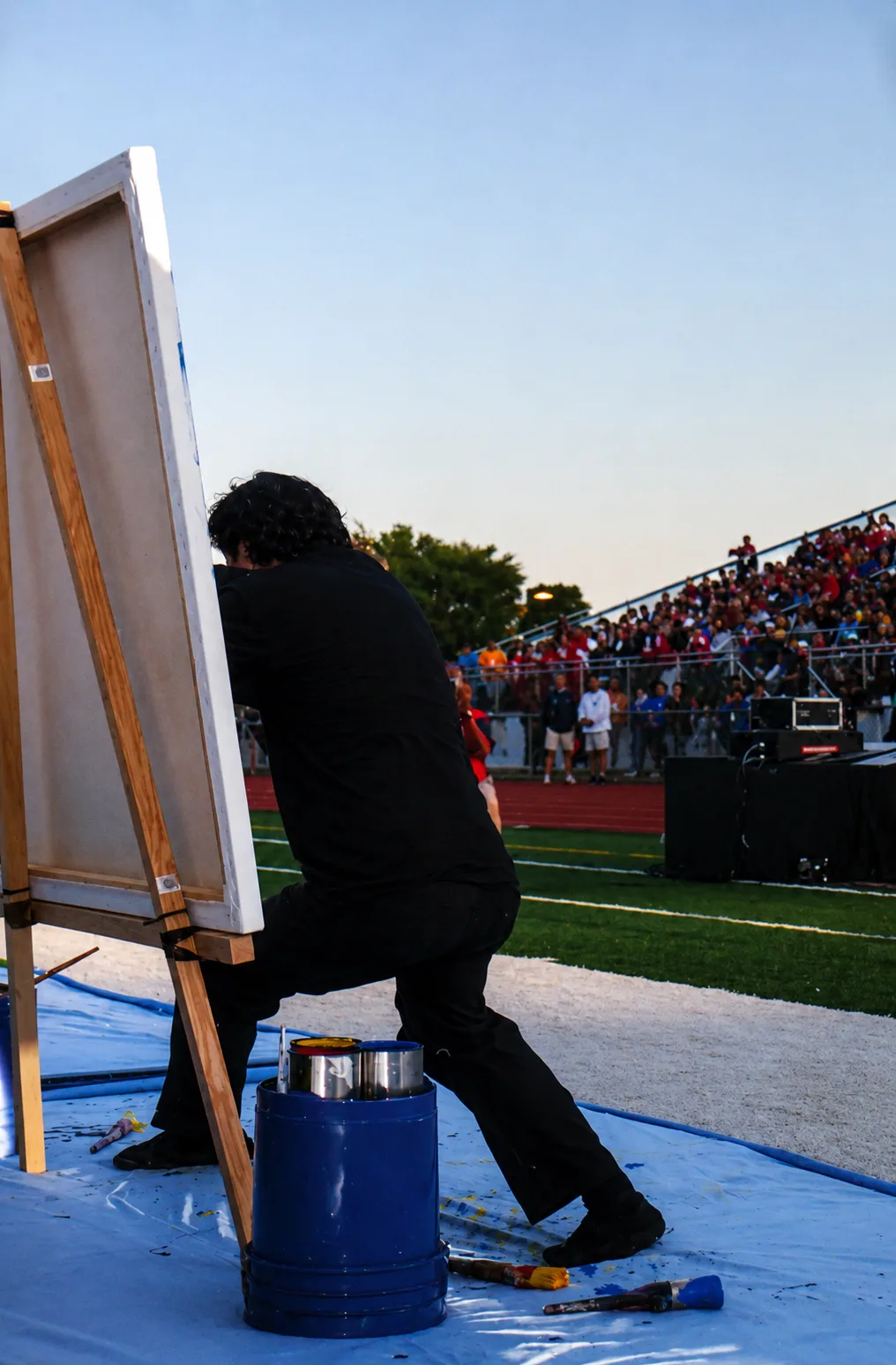
With less than four minutes available, and another painting scheduled immediately afterward, I painted the eagle on the stage floor in front of the trampoline.
I stepped up to the canvas, picked up the brushes. My hands were sore but functional.
The blank canvas faced the grandstands across the racetrack. Between me and those thousands of people: a hundred yards across the racetrack and field.
I looked out at them. Shapes. Silhouettes. A sea of faces that had just been gutted.
I had under four minutes. I normally need eight.
No photo. No sketch. No safety net.
The music started.
Chapter Four — The Grandstand Shook
Aaron Tippin's voice hit the speakers and rolled across the field like a wave.
I picked up the brushes.
I knew what I was painting. I knew why.
The tears started before the first stroke.
I painted through them. Didn't wipe them. Didn't stop. The brush moved and my hands shook and the tears ran down my face and I kept going, because this eagle wasn't for me. It was for a forty-year-old police officer who was supposed to be carrying a torch right now. It was for his wife. His kids. It was for every person in those grandstands who had just listened to his chief try to say goodbye and couldn't.
The canvas didn't know I was crying. The paint didn't care. It went where I put it.
An image took shape. Spreading. Rising.
And then — somewhere in the middle, before I was even done — I heard it.
It started low. So low I wasn't sure it was real. A rumble. Like distant thunder, except the sky had cleared.
Then clapping.
Then cheering.
Then foot stomping.
Louder. Harder. Building.
I was across an entire racetrack from those grandstands, and I could feel the vibration. Thousands of people — many of them the same kids who had absorbed every word of that eulogy and couldn't let go — were on their feet. Stomping. Clapping. Cheering.
I couldn't see their faces. They couldn't see my tears. But something was crossing that distance — an invisible current running from the brush in my hand, across a hundred yards of open field, to the soles of their feet. I felt them. And from the sound of it, they felt me.
Our grief had become the same grief. And now it was turning into something else.
The event producer told me later she thought the grandstand would come down.
She wasn't exaggerating. The structure was shaking. Metal and wood and concrete vibrating with the force of people who had been told this night was over — who had sat through a eulogy that was supposed to be the last memory — and were now refusing to let it end that way.
They were cheering for him. For the officer. For the torch he was supposed to carry. The eagle on that canvas had become his wings.
The gloom didn't just lift. It shattered.
When the eagle was finished, I moved to the second canvas — the torch runner painting that had been planned all along. The one I'd already painted twice that month: once for the President of the United States, once to be signed and presented to the Special Olympics ambassadors.
This time it wasn't a scheduled performance. It was an encore that nobody asked for and everybody needed.
It was like clouds parting. Sunbursts and rainbows after a storm that had nothing to do with the weather.
People kept finding me afterward. At the edge of the field. Walking to the car. At the hotel. The next morning at the airport. In the terminal. At the gate. Strangers touching my arm, saying thank you, saying they'd never forget it, saying things I couldn't respond to because I was still feeling it too.
All the way until I boarded the plane.
The eagle went to his family.
I don't know where it hangs today. But I know what it carried out of that grandstand. Not grief. Not gloom. Not the way he died.
The way he was honored.
If this story made you feel for a moment — that's the point.
Share it. Tell me what you felt. There are more stories like this — the presidential gala story is coming.
Please let us know if this story touched your heart by clicking the heart below